AEO Powersports – How Brembo Brake Components on the 2026 Kawasaki KX™450 Improve Lap Consistency around Avondale, AZ
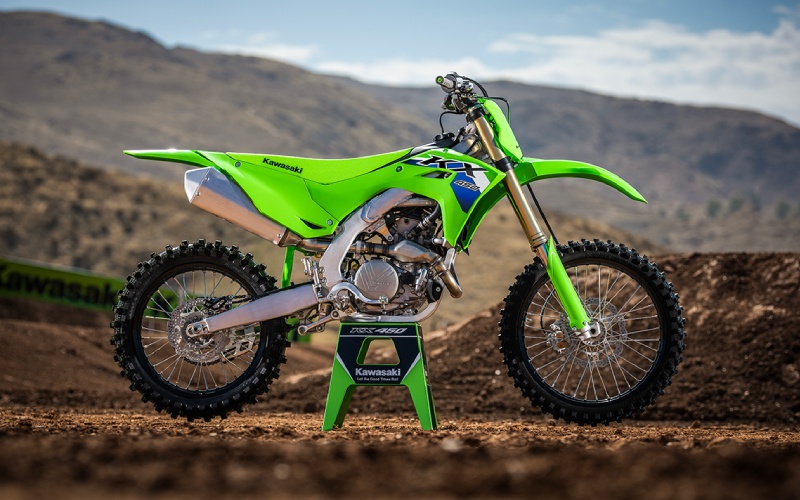
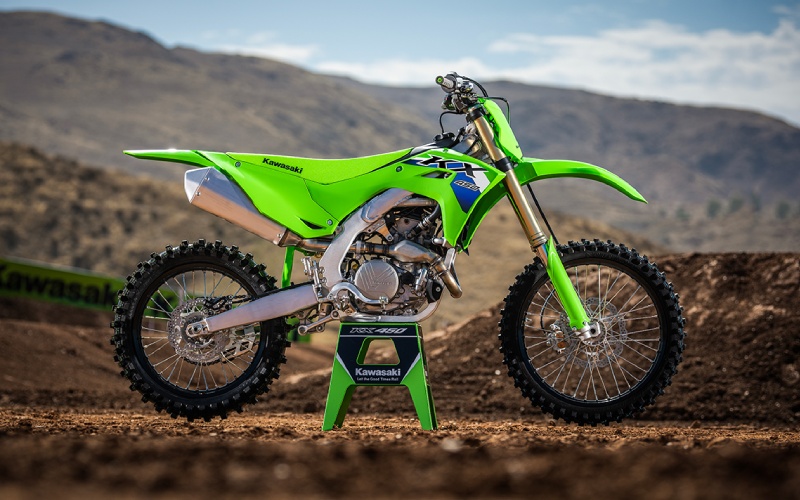
Braking zones set up passes and protect fast laps, which is why many riders ask how the 2026 Kawasaki KX™450’s Brembo brake components affect performance over a full moto. Around Avondale, AZ tracks where bumps grow quickly and lines shift, lever feel and modulation matter as much as outright power. The latest KX package pairs a semi-floating 270mm Braking/Sunstar front petal disc with a Brembo master cylinder and dual-piston caliper, backed by a 240mm rear petal disc — a recipe aimed at predictability, consistency, and reduced arm pump.
What sets this system apart is the linear response through the lever. Strong initial bite transitions into a broad, usable range that lets you trail brake deeper or settle the chassis without sudden spikes. When braking bumps stack or a rut forms at corner entry, that consistent feel helps you commit to a line, then make mid-corner micro-corrections without unsettling the front. Over race distance, more predictable inputs reduce mental load, freeing you to focus on body position, throttle timing, and exit drive.
- Modulation: The Brembo master cylinder translates small finger inputs into measurable deceleration, ideal when traction varies through a braking zone.
- Consistency: Heat-resistant design and the semi-floating disc help maintain feel across motos instead of fading when conditions get rough.
- Control: Dual-piston front caliper spreads clamping force for balanced pad contact, aiding stability into ruts and off-camber corners.
- Confidence: Clear feedback makes it easier to repeat braking points, tighten lines late in the day, and protect inside positions.
To get the most from the KX system around local tracks, treat braking as part of your chassis setup. Align fork and shock settings with your braking style. If you like aggressive initial bite, ensure the 49mm Showa coil-spring fork’s compression is not too soft, which can over-dive the front. If you trail brake deep, bump up fork rebound control slightly to keep the contact patch loaded without packing. Out back, Uni-Trak® shock balance is key — too little low-speed compression can pitch the bike forward under heavy braking; too much can feel harsh as braking bumps grow.
Brake pad choice also matters. Some riders prefer higher-friction pads for loamier days, while others lean toward a more progressive pad on hardpack to avoid lock-up. Keep rotors clean, bed pads properly, and check lever free play so bite point stays consistent. Small checks add up to big confidence when you are hunting tenths across multiple laps.
Frequently Asked Questions:
Will stronger brakes lead to more arm pump?
Not inherently. The KX’s Brembo-equipped front end prioritizes linear modulation. When paired with proper cockpit setup and a supportive fork, you can brake harder with fewer death-grip moments, which can actually reduce arm pump over time.
How should I adjust my fork for deep braking bumps?
Try a click or two more rebound to help the fork recover evenly across successive bumps, and fine-tune compression to prevent harsh spikes. As always, change one variable at a time and evaluate a full session before making more adjustments.
Do I need different pads for different tracks?
Not always, but it can help. Higher-friction pads deliver stronger initial bite for loamy or tacky days; a more progressive compound can be friendlier on polished hardpack. If your lever feel is good but initial bite feels too sharp or too soft, a pad change is a smart, affordable test.
Dialing in braking is a process — rotor condition, pad compound, lever angle, and suspension balance all play roles. If you want help turning notebook notes into on-track improvements, AEO Powersports is happy to share practical adjustments that riders can feel within a session. Our Mesa location is serving Waddell, Avondale, and Buckeye with the parts, service, and setup insight to make the KX package work for your pace, your tracks, and your goals.