AEO Powersports – Should You Choose ABS on the 2026 NINJA® ZX™-6R for Phoenix, AZ Streets and Track Days?
Riders weighing ABS on the 2026 NINJA® ZX™-6R usually want one thing: maximum confidence without losing the precise lever feel that makes a supersport special. Kawasaki’s ABS-equipped models add KIBS (Kawasaki Intelligent anti-lock Brake System), a system tuned with track performance in mind to refine pressure modulation and reduce wheel lock tendency while preserving feedback. That matters on imperfect city pavement, rain-slick mornings, and bumpy braking zones where grip can change quickly—from the Phoenix, AZ commute to your favorite canyon loop.
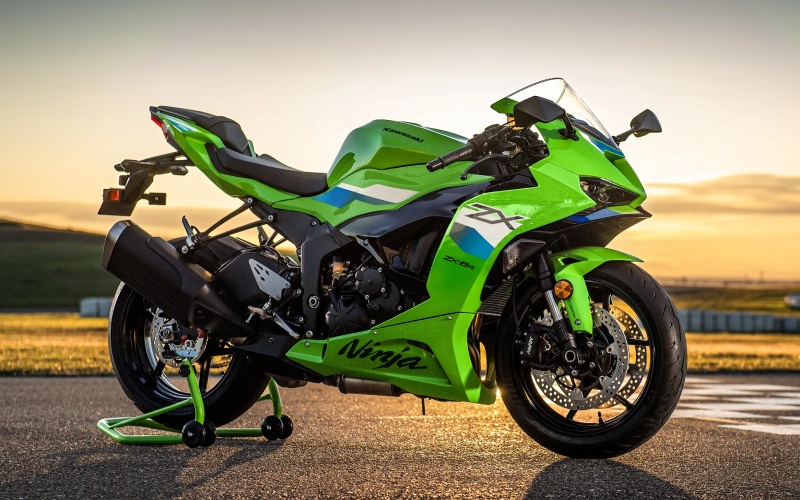
On the ZX™-6R, braking hardware is already serious: dual semi-floating 310 mm front discs, radial-mount monobloc, opposed 4-piston calipers, and a strong single 220 mm rear disc. KIBS builds on that foundation by monitoring inputs to balance braking force and wheel speed more precisely than conventional ABS systems, helping the chassis stay settled as you trail brake toward the apex. If your riding mixes daily traffic with weekend pace, that extra composure can be the difference between a clean line and an early stand-up on unpredictable surfaces.
Think about your roads and your pace. If your day-to-day includes rain, construction zones, or expansion joints mid-corner, ABS with KIBS is a practical layer of control. If you prioritize absolute simplicity and the lightest possible setup for closed-course riding, non-ABS keeps things minimal. Either way, the ZX™-6R’s core braking package is exceptional; KIBS simply broadens the margin for error in the real world.
- Urban routes: KIBS reduces unexpected lock tendencies over paint lines, manhole covers, and patchwork asphalt.
- Canyon carving: Better pressure modulation aids stability mid-corner and during late, decisive trail braking.
- Mixed-weather riding: In rain or cold mornings, KIBS helps preserve lever feel while managing reduced grip.
Frequently Asked Questions:
Does KIBS change lever feel compared to non-ABS?
KIBS is engineered to be as transparent as possible. You still feel progressive bite and a direct connection to the pads. The difference shows up when grip drops—KIBS smooths pressure changes so the chassis stays composed.
Is there a weight penalty with ABS?
ABS systems add components, so there is a modest weight increase compared to non-ABS. On the ZX™-6R, the gain is small enough that most street-focused riders prefer the added margin for variable pavement and weather.
Will KIBS interfere on track days?
KIBS is calibrated to minimize intrusive intervention. With proper technique and tires at temperature, it largely stays in the background, stepping in primarily when the surface is uneven or tire grip drops unexpectedly.
What about maintenance differences?
ABS adds sensors and control hardware, so inspections include checking sensor alignment and harness integrity along with standard brake service. Fluid changes and pad wear checks follow normal best practices—consistent torque, fresh fluid, and rotor cleanliness.
Whether you choose ABS or non-ABS, the ZX™-6R’s braking platform delivers repeatable power and feel. If you want a little extra peace of mind through changing seasons and surfaces, KIBS-equipped ABS is the smart call. If your priority is a stripped-down setup for closed-course riding, non-ABS remains a valid choice. AEO Powersports, serving Goodyear, Phoenix, and Waddell, can walk you through the configuration that matches your use case and set your suspension baseline so the rest of the chassis stays just as confidence-inspiring as your brakes.